Starting a Concrete Lifting Business?
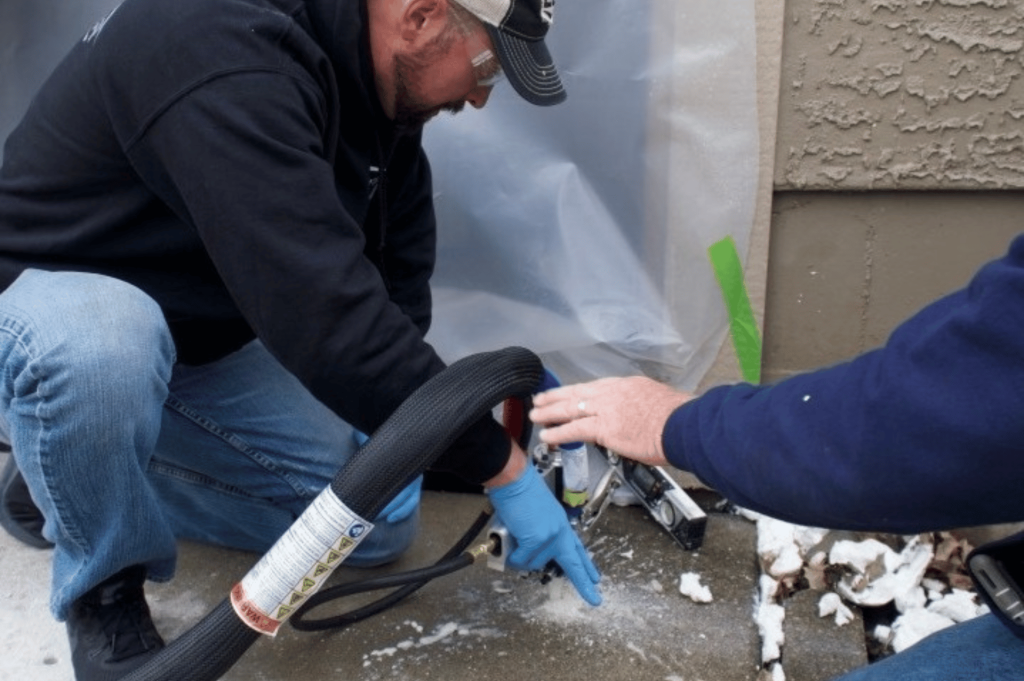
What You Need to Know About Polyurethane Foam
Concrete lifting and leveling is a fast-growing industry that offers contractors a lucrative business opportunity. If you’re considering entering the field, using polyurethane foam is one of the most effective methods for lifting and stabilizing concrete. Unlike traditional mudjacking, polyurethane foam is lightweight, durable, and provides long-lasting results with minimal disruption. In this guide, we’ll cover what you need to get started, industry best practices, and how ECP’s PolyPier system can set you up for success.
Why Choose Polyurethane Foam for Concrete Lifting?
Polyurethane foam is the preferred choice for modern concrete lifting due to its numerous advantages:
- Lightweight: Unlike traditional slurry used in mudjacking, polyurethane foam won’t add excessive weight to the soil.
- Quick Cure Time: Foam expands and hardens within minutes, allowing for fast project completion.
- Minimal Disruption: Small injection holes and minimal mess make it ideal for residential, commercial, and municipal applications.
- Versatile Applications: Perfect for lifting sidewalks, driveways, foundations, pool decks, and more.
Essential Equipment & Materials
To start your concrete lifting business with polyurethane foam, you’ll need:
- Polyurethane Foam System: ECP’s PolyPier system is engineered for precision and long-lasting performance.
- Drill & Injection Tools: Proper drill bits and injection equipment ensure an efficient process.
- Personal Protective Equipment (PPE): Safety gear such as gloves, respirators, and eye protection is essential.
- Support Equipment: Trailer, generator, air compressor, hoses, and pumps.
- Software & Business Tools: Estimating software, invoicing systems, and customer management tools to streamline operations.
Industry Best Practices
Following these best practices ensures a successful and professional concrete lifting business:
- Site Preparation & Evaluation: Assess soil conditions, slab movement, and potential voids before injection.
- Injection Techniques: Use proper hole spacing and injection pressure to achieve an even lift.
- Curing & Finishing: Monitor foam expansion and ensure precise leveling before sealing holes.
- Weather Considerations: Foam expansion can be affected by temperature and humidity—plan accordingly.
- Customer Education: Communicate the benefits and process of polyurethane foam lifting to homeowners and businesses.
Why Choose ECP’s PolyPier System?
ECP’s PolyPier polyurethane foam system is trusted by contractors nationwide. Designed for superior lift and long-term stability, PolyPier provides the consistency and quality needed for professional concrete lifting. ECP also supports contractors through ongoing education and training opportunities.
Join PolyPier School – April 21–23, 2026
For those new to the industry or looking to enhance their expertise, PolyPier School is a hands-on training experience where you’ll learn best practices, equipment operation, and troubleshooting techniques. The next session will be held April 21–23, 2026—don’t miss this opportunity to gain invaluable skills and industry knowledge!
Ready to Start Your Concrete Lifting Business?
Starting a concrete lifting business using polyurethane foam is a rewarding, high-demand venture. By choosing ECP’s PolyPier system, investing in the right equipment, and following industry best practices, you can build a successful operation. Ready to get started? Contact us today to learn more about PolyPier or sign up for the next PolyPier School training session!