Using Polyurethane Foam for Infrastructure and Industrial Applications
Polyurethane foam is widely recognized for lifting and leveling residential concrete, including sidewalks, driveways, patios, and other settled slabs. However, professional polyurethane systems can also play an important role in infrastructure, commercial, and industrial projects.
Depending on the project and polyurethane formulation, contractors may use polyurethane to lift and stabilize concrete, fill subsurface voids, address loss of support beneath pavement, fill abandoned underground structures, or provide specialized solutions for pipeline construction.
These projects can range from roadway and airport pavement repair to abandoned pipe and tank filling and trench breaker applications.
Infrastructure work also introduces considerations that may not be present on a typical residential concrete lifting project. Loads, subsurface conditions, water movement, access, project specifications, engineering requirements, and required material properties can all influence the appropriate solution.
For that reason, successful infrastructure polyurethane applications begin with understanding the problem and selecting the appropriate material and installation approach for the project.
Why Use Polyurethane Foam for Infrastructure Projects?
Infrastructure and industrial repair projects often involve conditions where excavation, demolition, or extended shutdowns can be disruptive.
Polyurethane offers several characteristics that can make it useful for appropriate applications.
Lightweight Material
Polyurethane foam has a relatively low material weight compared with many traditional fill materials. This can be beneficial when filling voids or working beneath concrete where adding significant additional weight may be undesirable.
Expanding Properties
Polyurethane reacts and expands after placement, allowing appropriate formulations to fill accessible void spaces and irregular areas.
For concrete lifting applications, this expansion can also generate controlled force against the underside of a slab.
Limited Access Requirements
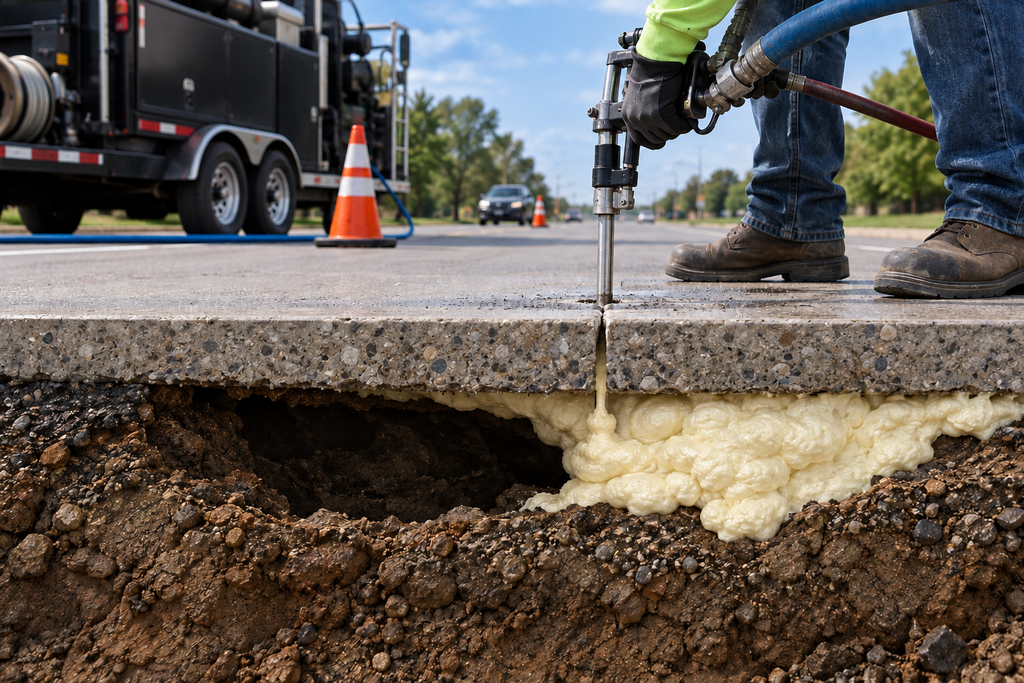
Polyurethane can often be introduced through relatively small injection points. This can allow contractors to access areas beneath concrete or inside underground structures without extensive excavation.
Rapid Reaction
Many polyurethane systems react quickly. Depending on the application and project requirements, this can help reduce repair time and disruption.
This characteristic can be especially valuable on projects where access or operational shutdown windows are limited.
Multiple Formulations for Different Applications
Infrastructure projects do not all require the same material properties.
Different polyurethane formulations can be selected for different lifting, stabilization, void-filling, and specialty applications.
That makes material selection an important part of project planning.
Not All Polyurethane Foams Are the Same
“Polyurethane foam” describes a category of materials—not one universal product suitable for every project.
A foam intended for one type of concrete lifting project may have different characteristics than a material selected for void filling or another specialty infrastructure application.
Depending on the project, contractors, engineers, and other project stakeholders may need to consider factors such as:
- Material density
- Expansion characteristics
- Compressive properties
- Reaction time
- Expected loads
- Size and configuration of the void
- Water and moisture conditions
- Temperature and environmental conditions
- Required lift or stabilization
- Placement or injection requirements
- Project specifications
Material should be selected according to the requirements of the application rather than assuming one polyurethane formulation is appropriate for every job.
PolyPier offers multiple polyurethane solutions for professional applications, allowing contractors to match material capabilities with specific project needs.
Road and Highway Lifting, Stabilization, and Void Filling
Roadways can experience loss of support as underlying materials settle, erode, or develop voids. Depending on pavement type and project conditions, polyurethane may provide a way to address some of these problems with limited disruption to the existing surface.
Professional roadway applications can include several different objectives.
Concrete Pavement Lifting
When a suitable concrete pavement section has settled, polyurethane can be injected beneath the slab.
As the material reacts and expands, it can provide controlled lifting force while a trained contractor monitors pavement movement and elevation.
Void Filling Beneath Pavement
Water movement, erosion, settlement, or other subsurface conditions can contribute to void development beneath pavement.
Polyurethane can be injected into accessible void spaces to help restore support beneath appropriate pavement sections.
Identifying why support was lost remains important. Filling a void does not necessarily correct an ongoing drainage, erosion, or water-management problem that contributed to its formation.
Pavement Stabilization
Not every pavement project requires a significant lift.
Where concrete has lost contact with portions of its supporting base, polyurethane may be used to fill accessible spaces and help reestablish support beneath the pavement.
Undersealing
Polyurethane may also be used in appropriate pavement undersealing applications to fill voids and improve support beneath pavement.
The exact purpose, material selection, injection plan, and performance requirements of an undersealing project should be determined by the pavement conditions and applicable project specifications.
Learn more about PolyPier roadway applications.
Airport Runways, Taxiways, and Concrete Pavement
Airports present a demanding environment for concrete and pavement repair.
Runways, taxiways, aprons, and other paved areas may experience repeated loading while also operating under strict maintenance schedules. When settlement or loss of support develops, repairs may need to be completed within carefully planned operational windows.
Depending on pavement construction, condition, and project requirements, polyurethane may be considered for applications such as:
- Filling subsurface voids
- Stabilizing areas that have lost underlying support
- Providing controlled lifting of appropriate concrete pavement
- Addressing localized settlement where polyurethane repair is suitable
The rapid reaction characteristics of polyurethane can be advantageous where minimizing repair time is an important project consideration.
However, airport pavement projects require careful evaluation. Loads, pavement design, elevations, operational requirements, engineering specifications, and applicable airport or agency requirements should all be considered when developing the repair plan.
Filling Abandoned Underground Tanks and Pipes
Polyurethane also has applications that don’t involve lifting concrete at all.
When underground tanks or pipes are abandoned, leaving an empty structure below ground may create future concerns if the structure deteriorates or collapses.
Complete removal may sometimes be preferred or required, but excavation isn’t appropriate or practical in every situation. Depending on the structure, regulations, engineering requirements, and project specifications, filling the abandoned space may be considered.
Appropriate foam systems can offer several potential advantages for certain abandonment or void-filling applications.
Limited Access
Material can be placed through strategically planned openings, potentially reducing the amount of excavation needed to access the structure.
Filling Irregular Spaces
Expanding material can conform to accessible spaces within pipes, tanks, or other underground structures.
Lightweight Fill
Polyurethane’s relatively low weight can be beneficial in applications where minimizing the weight of the fill material is important.
Difficult-to-Access Locations
Foam placement may offer an option where conventional fill materials would be difficult to transport or place effectively.
Tank and pipe abandonment requirements can vary considerably by structure, location, environmental conditions, and applicable regulations. Contractors should determine project-specific requirements before selecting a fill material or abandonment method.
Explore PolyPier solutions for commercial and specialty applications.
Polyurethane Trench Breakers for Pipeline Construction
Pipeline projects introduce another specialized application for polyurethane foam: trench breakers.
What Is a Trench Breaker?
A trench breaker is a barrier installed within a pipeline trench to help control the movement of water along the trench and reduce erosion or migration of supporting material.
This can be particularly important where terrain, slope, groundwater, or surface water creates the potential for water to travel along the trench.
Traditional trench breaker construction may involve materials such as sandbags. Depending on project requirements, polyurethane provides another method of forming a barrier around a pipeline.
Why Use Polyurethane for Trench Breakers?
An appropriate polyurethane system can expand and conform to the shape of the trench and pipeline, allowing the material to accommodate irregular spaces.
Potential advantages can include:
- Conforming to trench geometry
- Efficient placement
- Reduced handling of individual fill components
- Adaptability to different trench configurations
- Formation of a continuous barrier where appropriately designed
As with other infrastructure applications, trench breaker design and material selection should follow the requirements and specifications of the pipeline project.
What Should Contractors Evaluate Before an Infrastructure Polyurethane Project?
Infrastructure projects require more than identifying a void and selecting an injection location.
Before recommending or installing a polyurethane solution, contractors and project stakeholders should understand the conditions they’re trying to address.
Depending on the application, important considerations may include:
Structure or Pavement Condition
Determine whether the existing concrete, pavement, pipe, tank, or other structure is suitable for the proposed repair or filling method.
Subsurface Conditions
Soil, base material, voids, erosion, and loss of support can influence both the problem and the appropriate solution.
Water Conditions
The presence and movement of water can be particularly important.
If erosion or water movement contributed to void formation or loss of support, contractors should determine whether those conditions require separate corrective measures.
Size and Location of Voids
Understanding where voids exist and their approximate extent can help guide material selection and the repair plan.
Expected Loads
A roadway, airport pavement, industrial slab, and abandoned pipe present very different performance requirements.
The expected loads and intended use of the repaired area should be part of the evaluation.
Access
Contractors should consider equipment access, injection or placement locations, traffic, working space, and other jobsite limitations.
Environmental and Site Conditions
Temperature, moisture, surrounding structures, utilities, and other site conditions may influence material behavior and installation.
Project and Engineering Specifications
Infrastructure work may involve engineers, municipalities, transportation agencies, facility owners, general contractors, or other stakeholders.
Applicable plans, specifications, testing requirements, regulations, and agency requirements should be incorporated into the repair approach.
Choosing the Right Polyurethane for the Application
The best polyurethane solution isn’t simply the foam that can expand into a space.
It is the material whose characteristics align with the specific performance requirements of the project.
A roadway stabilization project, for example, can have very different requirements from filling an abandoned tank or constructing a trench breaker.
Contractors should consider:
What problem are we trying to solve?
Is the objective lifting, stabilization, void filling, abandonment filling, water management, or another specialized application?
What conditions will the material encounter?
Consider loads, water, temperature, soil and base conditions, access, and the geometry of the area being treated.
What material properties does the project require?
Density, expansion, reaction characteristics, compressive properties, and other performance characteristics should align with the application and applicable specifications.
What does the project documentation require?
Engineering plans, agency requirements, specifications, and other project documentation may determine or influence acceptable materials and installation procedures.
For specialized projects, contractors can work with ECP to identify PolyPier products appropriate for the intended application and project requirements.
Infrastructure Polyurethane Applications at a Glance
| Application | Common Project Need | Potential Role of Polyurethane |
|---|---|---|
| Roads and highways | Settlement or loss of support | Lifting, stabilization and void filling |
| Concrete pavement | Voids beneath slabs | Filling accessible voids and restoring support |
| Airport pavement | Settlement or loss of support with limited repair windows | Controlled lifting, stabilization or void filling where appropriate |
| Abandoned tanks | Empty underground structures | Lightweight void filling |
| Abandoned pipes | Unused underground pipe space | Filling accessible internal space |
| Pipeline trenches | Water movement and erosion concerns | Formation of trench breakers |
The appropriate polyurethane material and installation method should always be determined by the conditions and requirements of the individual project.
Frequently Asked Questions About Polyurethane Foam for Infrastructure
Yes. Depending on pavement construction and project conditions, polyurethane can be used for applications including concrete pavement lifting, void filling, and stabilization. Contractors should evaluate the pavement, underlying conditions, loads, and project specifications before determining the appropriate solution.
Polyurethane can be injected beneath appropriate concrete pavement where voids or loss of support have developed. As the material expands, it can fill accessible spaces and help restore contact and support beneath the slab. Projects requiring elevation correction may also involve controlled lifting.
Polyurethane may be used to fill accessible subsurface voids beneath appropriate pavement. The cause and extent of void formation should also be investigated so that ongoing conditions such as erosion or water movement aren’t overlooked.
Polyurethane may be appropriate for certain airport pavement lifting, stabilization, or void-filling applications. Airport projects can have demanding loading, elevation, operational, engineering, and agency requirements, so each project should be individually evaluated.
Polyurethane undersealing generally involves injecting material beneath pavement to fill voids and improve support. The specific purpose and design of an undersealing project depend on pavement conditions and project requirements.
Appropriate foam systems may be used to fill certain abandoned underground structures where project specifications and applicable requirements allow. The structure, accessibility, environmental conditions, regulations, and long-term project requirements should be evaluated before selecting a fill method.
A polyurethane trench breaker is a foam barrier formed within an appropriate pipeline trench to help control water movement and reduce erosion or migration of material along the trench. The polyurethane expands to conform around the pipeline and trench geometry.
Selection should be based on the application and required material performance. Contractors may need to consider density, expansion, reaction time, compressive properties, water conditions, expected loads, temperature, access, project specifications, and other site-specific requirements.
The appropriate formulation can differ depending on the application. Infrastructure, industrial, void-filling, and residential lifting projects can have different performance requirements, which is why contractors should select polyurethane according to the intended use rather than treating all foam systems as interchangeable.
PolyPier Solutions for Infrastructure and Industrial Contractors
Infrastructure polyurethane applications require more than the ability to inject expanding foam.
They require an understanding of the structure, subsurface conditions, project objective, material properties, installation requirements, and expected performance.
PolyPier by Earth Contact Products offers polyurethane solutions for professional concrete lifting, stabilization, void filling, and specialty applications.
With multiple polyurethane formulations available, contractors can work with ECP to identify solutions suited to the requirements of different commercial, industrial, and infrastructure projects.
Have an Infrastructure or Industrial Polyurethane Application?
Every infrastructure project presents its own combination of materials, loads, site conditions, access limitations, and performance requirements.
If you’re evaluating polyurethane for a roadway, airport pavement, void-filling, abandoned structure, pipeline, or other commercial or industrial application, contact ECP to discuss the project and appropriate PolyPier solutions.
Contractors interested in expanding their polyurethane capabilities can also learn more about PolyPier concrete lifting training and opportunities to become a PolyPier partner.