What Is Spray Foam Insulation? A Quick Guide for Contractors
If you’re a contractor looking to expand your services—or want to better explain spray foam to your customers—you’ve probably heard a lot of buzz about spray foam insulation. But what exactly is it? How does it work? And why are so many builders, remodelers, and property owners choosing it over traditional insulation?
This quick guide breaks it down without getting too technical, so you can focus on what really matters: understanding the product, selling the benefits, and getting the job done right.
What Is Spray Foam Insulation?

Spray foam insulation is exactly what it sounds like—a foam material sprayed directly into walls, attics, crawl spaces, and other areas to create an airtight, high-performance insulation barrier. It starts as a liquid, expands quickly, and then hardens in place.
At PolyPier, we offer both open-cell and closed-cell spray foam, providing contractors with options for a wide range of jobs.
What’s the Difference Between Open-Cell and Closed-Cell Foam?
While both products insulate well, they serve different purposes:
Open-Cell Spray Foam
- Lightweight and flexible
- Great for interior walls and soundproofing
- Lower cost per square foot
- Not water-resistant
Closed-Cell Spray Foam
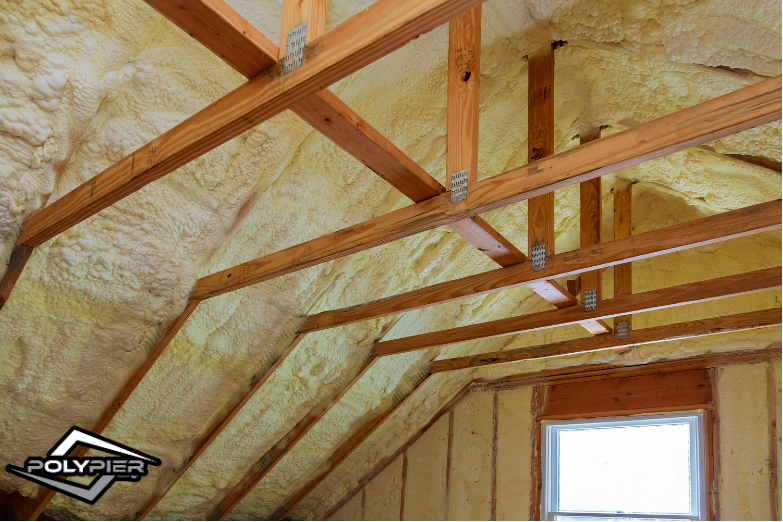
- Dense and rigid
- Strong moisture barrier
- Higher R-value per inch
- Adds structural strength to walls
- Ideal for basements, crawl spaces, metal buildings, and exterior applications
Not sure which one to use? The job site usually makes the decision easy. For damp environments or areas that require additional strength, closed-cell foam is the ideal choice. For standard interior walls and budget-friendly projects, open-cell gets the job done.
Why Contractors Are Choosing Spray Foam Over Fiberglass or Cellulose
Traditional insulation like fiberglass batts or blown-in cellulose can work, but spray foam takes performance to the next level:
- Air sealing: Spray foam closes every gap, reducing drafts and energy waste.
- Moisture control: Closed-cell foam resists water and helps prevent mold growth.
- Long-term performance: It stays in place—no sagging, no settling.
- Energy savings: Helps lower utility bills by creating a tight thermal envelope.
For contractors, this means fewer callbacks, better customer satisfaction, and a product that adds real value to every project.
Where Can You Use Spray Foam?
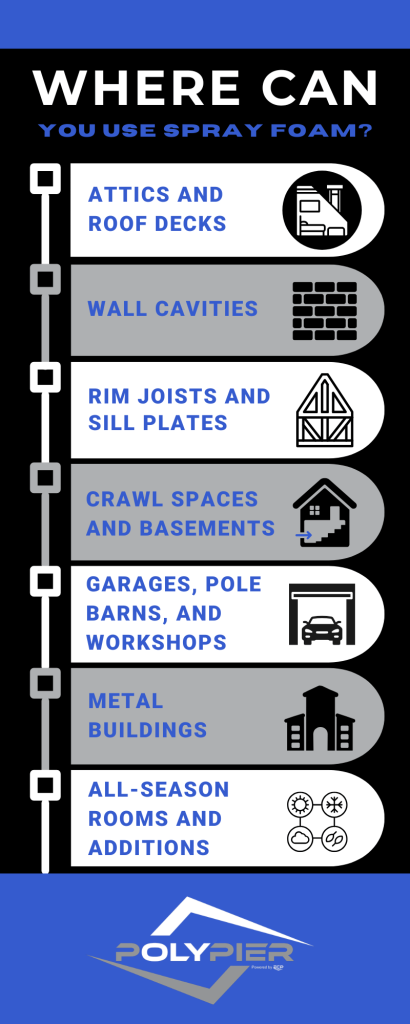
Spray foam is versatile enough for:
- Attics and roof decks
- Wall cavities
- Rim joists and sill plates
- Crawl spaces and basements
- Garages, pole barns, and workshops
- Metal buildings
- All-season rooms and additions
Whether you’re insulating a new home, upgrading an older property, or sealing up a commercial space, spray foam delivers consistent results.
Get Started with PolyPier Spray Foam
At PolyPier, we supply high-quality spray foam products, along with the equipment and support contractors need to succeed. Whether you’re adding insulation services for the first time or you’re already a seasoned installer, we’re here to help you do the job right.
Want to learn more or get product recommendations? Contact us today.