Common Questions About Sinking Concrete

If you’ve ever had any questions about how or why concrete sinks – here are the answers! So why is your concrete sinking? – Find out below!
Signs that your concrete may be sinking
- Cracks: Sinking concrete often develops cracks in the concrete itself or in adjoining structures such as walls or foundations.
- Uneven surfaces: Uneven areas or slopes in your concrete may indicate that your concrete is sinking
- Water pooling: Does water appear to collect in specific areas of your concrete rather than drain properly?
Is it normal for concrete to sink?
Yes and no. While it is not normal for concrete to sink, it IS pretty standard, especially in areas with certain soil conditions or construction practices. Ultimately, concrete sinking is a problem that many property owners encounter at some point. Concrete sinks because it is heavy! When the soil or materials beneath the concrete erode or cannot support the concrete’s weight, the slab will begin to sink.
What causes concrete to sink?
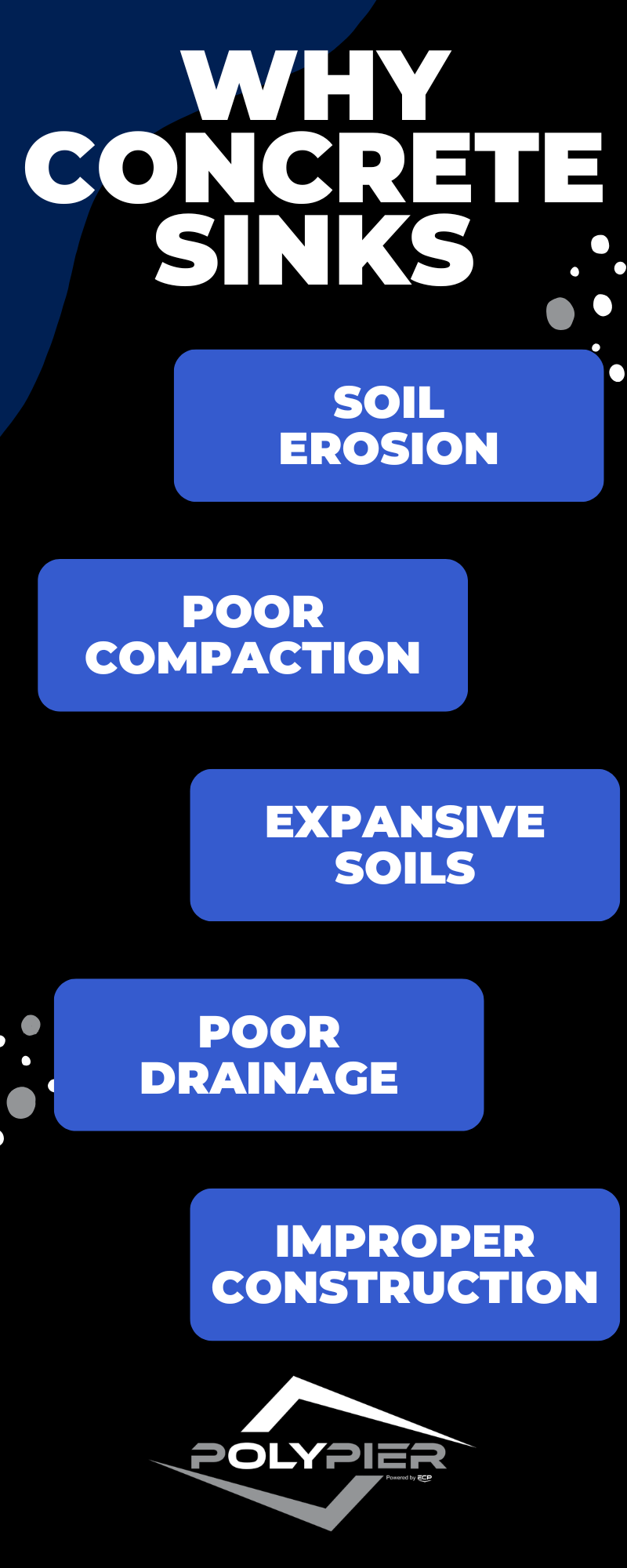
The most common causes involve erosion or poor construction.
Concrete Hero
Now, for the more extended version, it can be complicated.
Soil Erosion: Water or improper drainage can erode the soil beneath the concrete, creating voids. As the soil erodes, the concrete loses support and begins to sink into the voids.
Soil compaction or composition: The type of soil on which your concrete was poured may not have been optimal or appropriately compacted. Expansive soils, like clay, swell when they absorb water and shrink when they dry out. These moisture fluctuations can lead to soil movement, creating voids and causing the concrete to sink. Other types of soil can be weak, loose, or simply unsuitable for supporting the weight of concrete.
Improper construction techniques during concrete pouring can result in inadequate support and stability, increasing the structure’s susceptibility to sinking over time. Insufficient site preparation, such as failure to properly compact the soil or address potential drainage issues, can lead to future settlement and sinking of the concrete. Other construction shortcuts, such as incorrect reinforcement or insufficient concrete mix or thickness, can cause sinking.
Can you fix sinking concrete?
Yes, you can! There are several options for fixing sinking concrete.
One option is to lift the concrete with polyjacking or mudjacking. We recommend using PolyPier for the polyjacking process. PolyPier® is a polyurethane foam product that expands to fill voids, lifts the concrete back to its original position, and provides support. Installing and curing quickly yield relatively quick, clean results with immediate benefits.
PolyPier® is the product of choice for concrete lifting, leveling, void filling, undersealing floor slabs, roads, highways, and repairs to bridge approaches and departures. This product is available in various high-density formulations with different compression and tensile strength values and flow variations, allowing fine-tuning to suit your project.
Another option: Piering or underpinning. If the sinking concrete is caused by unstable or shifting soil, piering or underpinning may be necessary. This involves installing steel piers or helical anchors deep into the stable soil layers beneath the sinking concrete. These piers or anchors provide support, lifting the concrete to its proper level.
Consult with a foundation repair specialist to assess the sinking concrete, determine the appropriate repair method, and ensure a long-lasting solution.

Why should I fix my sinking concrete?
- Safety – Sinking concrete poses a safety hazard. Uneven surfaces can be dangerous, increasing the risk of trips, falls, and accidents.
- Aesthetics – Cracked and sinking concrete isn’t very attractive. It detracts from your property’s overall appearance. Repairing the concrete can enhance your property’s curb appeal and increase its value.
- Structural integrity – Sinking concrete can compromise the stability and integrity of surrounding structures, including foundations, walls, and other concrete elements. Fixing the concrete prevents further damage to these structures and maintains their integrity.
Can I pour over old and sunken concrete?
Yes, you can, but is it the right option? This process is called concrete resurfacing. Although this may seem the right choice because it’s the easiest solution, you need to assess your objective. Repouring concrete over an unstable base will provide a temporary aesthetic fix. However, what made the concrete sink in the first place?
Resurfacing the concrete may be appropriate if your concrete problems are superficial or cosmetic. However, if the concrete sank because the underlying soil was unstable, addressing the underlying cause and repairing the base will be necessary to prevent the concrete from sinking again over time.
Next steps
Some minor settling or slight changes in level can occur naturally with concrete. Still, significant sinking or noticeable changes in a short period indicate underlying issues that need attention. If you notice that your concrete is sinking or settling, have it inspected by a professional to determine the cause and assess whether corrective measures are needed. Prompt action can help prevent further damage and ensure the long-term stability of your concrete structure.