How Temperature and Jobsite Conditions Affect Polyurethane Concrete Lifting
How Temperature and Jobsite Conditions Affect Polyurethane Concrete Lifting
Concrete lifting contractors don’t work in a controlled environment.
One project may involve a driveway warmed by direct afternoon sun. Another may be a shaded sidewalk after several days of rain. A commercial slab may be indoors while the outdoor temperature is below freezing. Even two projects completed on the same day can present very different conditions beneath the concrete.
That’s why the calendar alone doesn’t determine whether conditions are right for polyurethane concrete lifting.
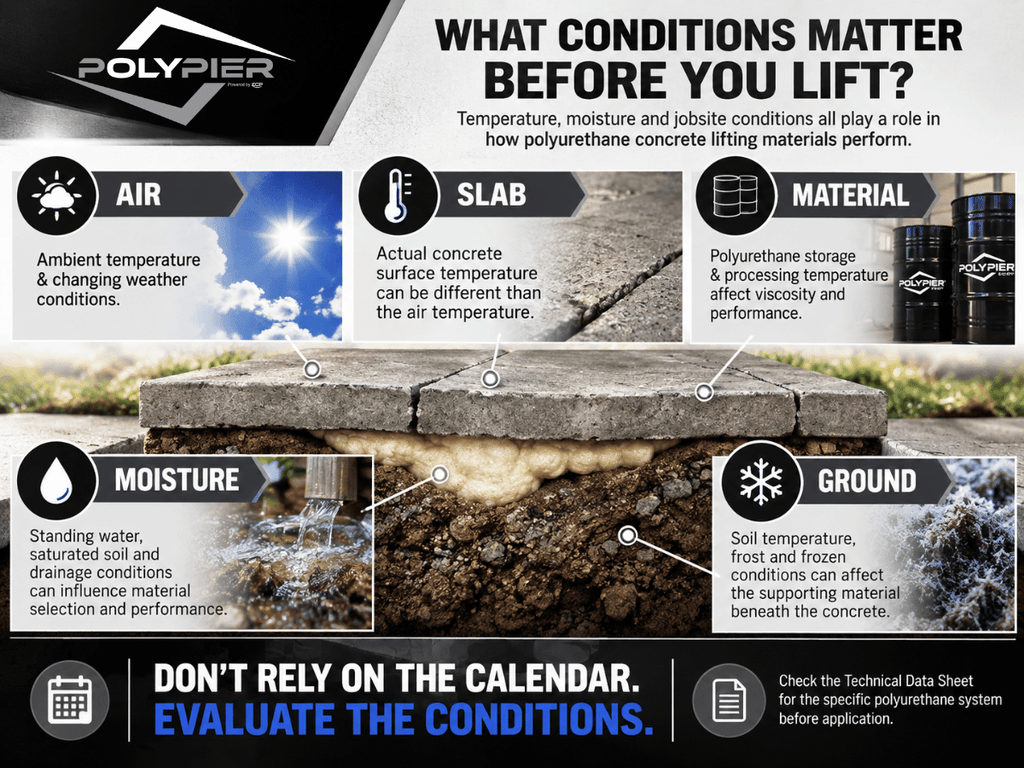
Ambient temperature, slab temperature, material temperature, soil conditions, moisture, drainage and changing weather can all influence how a contractor approaches a job.
Before drilling the first injection point, contractors should understand the conditions they’re working in—and confirm that the polyurethane system, equipment and application plan are appropriate for them.
Don’t Judge a Concrete Lifting Job by the Air Temperature Alone
Checking the weather forecast is useful, but the number displayed on a weather app doesn’t tell you everything happening at the jobsite.
Consider a sunny fall afternoon when the air temperature is 60°F. A concrete driveway exposed to direct sunlight may be considerably warmer than a shaded slab on the north side of the same building.
Likewise, an unusually warm afternoon following several cold nights doesn’t necessarily mean the ground beneath a slab has warmed at the same rate.
Contractors should think about several different temperatures:
- Ambient air temperature
- Concrete surface temperature
- Subsurface and soil conditions
- Polyurethane component temperature
- Equipment and hose temperature
These conditions aren’t interchangeable.
Understanding the difference is especially important during spring and fall, when daytime and nighttime temperatures can fluctuate significantly.
Why Temperature Matters to Polyurethane

Polyurethane systems rely on a controlled chemical reaction.
Temperature can affect how materials process and how the foam reacts, expands and develops its intended properties. That means contractors shouldn’t assume that every polyurethane formulation will behave identically under the same conditions.
PolyPier offers multiple polyurethane systems with different densities and performance characteristics for applications including concrete lifting, void filling, saturated conditions and soil stabilization.
Always follow the Technical Data Sheet (TDS) and application guidance for the specific polyurethane being used.
The question shouldn’t simply be:
“Is it too cold to lift concrete today?”
A better question is:
“Are the material, equipment and jobsite conditions within the recommendations for the polyurethane system I’m using?”
Material Temperature Matters, Too
Contractors sometimes focus so heavily on outdoor conditions that they overlook the temperature of the polyurethane components themselves.
Material stored overnight in an unheated truck or trailer may be considerably colder than the afternoon air temperature. Likewise, drums stored in excessive summer heat can present different processing concerns.
Polyurethane components need to be stored and conditioned according to the manufacturer’s specifications.
Depending on the system, improper material temperatures can affect viscosity, mixing and processing through the equipment.
This makes material management especially important during seasonal transitions.
In fall, for example, a contractor may begin the day with equipment and materials that have been exposed to cold overnight temperatures even though the afternoon forecast looks favorable.
The weather at 2 p.m. doesn’t tell you what happened to your material at 2 a.m.
Consider the Temperature of the Concrete
Concrete can absorb and retain heat differently from the surrounding air.
Direct sunlight, shade, wind, recent nighttime temperatures and the slab’s location can all affect surface temperature.
For contractors, that means two sections of concrete at the same property may not necessarily present identical conditions.
A driveway exposed to full sun may behave differently from:
- A sidewalk shaded by the house
- A slab beneath a covered entry
- An interior warehouse floor
- A concrete surface near a heated building
- A slab that has remained shaded and damp
When conditions are approaching the limits recommended for a particular polyurethane system, measuring rather than guessing becomes increasingly important.
A surface or infrared thermometer can provide useful information that the weather forecast cannot.
What About Cold-Weather Concrete Lifting?
Cold weather doesn’t automatically mean that every polyurethane concrete lifting project must stop.
But contractors need to pay closer attention as temperatures decline.
Questions to consider include:
- Is the concrete within the recommended application conditions?
- Are the polyurethane components properly conditioned?
- Is the ground beneath the slab frozen?
- Is frost present?
- Has water beneath or around the slab frozen?
- Are temperatures expected to drop substantially during the project?
- Can equipment and materials be maintained within their required operating ranges?
Frozen subsurface conditions deserve particular attention.
A slab may appear liftable at the surface while frozen soil or moisture beneath it creates conditions that don’t represent the site’s normal support characteristics.
If the ground beneath the concrete is frozen, postponing the project may be appropriate until the contractor can accurately evaluate the underlying conditions.
Hot Weather Creates Different Considerations
Summer presents the opposite challenge.
Concrete exposed to direct sunlight can become much hotter than the surrounding air, particularly on large, unshaded slabs.
High temperatures can influence polyurethane reaction and processing, potentially reducing the amount of working time a contractor has to control the lift.
Contractors working in hot conditions should evaluate:
- Actual slab temperature
- Direct sun exposure
- Material storage conditions
- Equipment temperatures
- Manufacturer-recommended processing ranges
- How quickly the polyurethane system being used reacts under those conditions
Scheduling can sometimes help.
A project that presents challenging surface temperatures during the middle of a summer afternoon may offer more manageable conditions earlier in the day.
Again, the decision should be based on actual conditions and the specifications of the polyurethane being used—not simply the month on the calendar.
Moisture May Matter as Much as Temperature
Temperature isn’t the only environmental condition beneath a slab.
Follow the water.
A settled driveway, sidewalk or commercial slab may have experienced erosion or loss of support because water has been moving beneath or alongside it.
During the jobsite evaluation, look for:
- Standing water
- Saturated soil
- Poor drainage
- Downspout discharge
- Washout
- Erosion along slab edges
- Water moving through underlying soils
- Areas that remain persistently wet
These conditions can help explain why the concrete settled in the first place.
They can also affect material selection.
PolyPier offers hydrophobic and hydro-insensitive polyurethane formulations designed for lifting and void-filling applications where water or saturated conditions are present.
That doesn’t mean water can simply be ignored.
It means contractors should identify moisture conditions and select the appropriate material and repair approach accordingly.
Rain Before a Project Can Tell You Something
A rainstorm doesn’t necessarily tell a contractor whether a project can or cannot proceed.
But it can reveal valuable information about the site.
After rain, contractors may be able to see:
- Where water collects
- Where runoff travels
- Whether downspouts discharge near settled concrete
- Where soil is eroding
- Which areas remain saturated
- Whether water is entering voids beneath the slab
Those observations may help explain the settlement.
A project inspected only during dry weather can sometimes hide drainage patterns that become obvious after rainfall.
Rather than viewing moisture solely as an obstacle, contractors should also treat it as diagnostic information.
Understand the Difference Between Moisture and Frozen Moisture
This becomes particularly important in late fall and early spring.
Wet soil and frozen soil are not the same jobsite condition.
Polyurethane formulations designed to perform in wet or saturated environments can provide options for contractors dealing with moisture. PolyPier offers hydrophobic products intended for wet lifting, void-filling and geotechnical applications.
Frozen ground presents a different issue.
If the supporting material beneath a slab contains frozen moisture, its volume and behavior may change once it thaws. That can make it difficult to evaluate the slab’s normal support conditions accurately.
A contractor should understand what is beneath the concrete before deciding that a cold-weather project is ready for injection.
Fall Concrete Lifting: Pay Attention to Changing Conditions
Fall can offer favorable working conditions for concrete lifting, but it also illustrates why contractors should stop thinking strictly in terms of “good seasons” and “bad seasons.”
Conditions can change quickly.
A warm afternoon may follow a near-freezing night. Several dry days may be followed by heavy rain. Leaves and debris can conceal cracks, joints or drainage paths.
As fall progresses, contractors should pay particular attention to:
- Overnight low temperatures
- Large day-to-night temperature swings
- Slab temperature early in the day
- Material storage overnight
- Increasing soil moisture
- Falling leaves covering cracks or drainage areas
- Shorter daylight hours
- Forecast freezes
- Frost or frozen soil beneath shaded areas
For contractors in colder climates, fall is also the time to begin adjusting material-handling and equipment routines for winter conditions.
Seasonal Soil Conditions Can Help Explain Settlement
The soil beneath concrete doesn’t remain unchanged throughout the year.
Moisture, drought, rainfall, drainage and freeze-thaw cycles can affect supporting soils and contribute to changing conditions beneath a slab.
That’s one reason contractors should look beyond the visible low spot.
Ask:
- Has the area recently experienced heavy rain?
- Is there evidence of prolonged dry conditions?
- Is water draining toward the slab?
- Has supporting soil washed away?
- Are there voids beneath the concrete?
- Is settlement occurring throughout the property or only in one location?
Temperature and weather are part of the investigation—not merely obstacles to scheduling.
When Should a Contractor Postpone a Concrete Lift?
There isn’t one universal outdoor temperature that answers this question for every polyurethane system and every project.
A contractor should consider postponing a project when conditions fall outside the manufacturer’s requirements or when site conditions prevent the contractor from confidently predicting how the slab and supporting material will respond.
That may include situations where:
- The ground beneath the slab is frozen
- Frost or ice interferes with the application
- Material cannot be maintained at the required processing temperature
- The concrete surface falls outside the product’s recommended conditions
- Standing or moving water creates conditions inappropriate for the selected polyurethane
- Severe weather makes safe, controlled work difficult
- The contractor cannot adequately evaluate the underlying conditions
- Conditions are expected to change significantly during the project
Knowing when not to inject is part of knowing how to lift concrete professionally.
Pre-Lift Weather & Jobsite Checklist
Before starting a polyurethane concrete lifting project, contractors should consider:
Weather
- What is the current air temperature?
- What are the forecast conditions during the project?
- What were the overnight temperatures?
- Is rain, freezing weather or a significant temperature change approaching?
Concrete
- What is the actual slab temperature?
- Is the slab in direct sunlight or shade?
- Is there frost, ice, standing water or excessive surface moisture?
Subsurface Conditions
- Is the supporting soil wet, saturated or frozen?
- Is there evidence of erosion or washout?
- Are voids likely beneath the concrete?
- How is water moving around the site?
Materials & Equipment
- Have polyurethane components been stored within their recommended temperature range?
- Are materials properly conditioned for processing?
- Is the equipment operating at the settings required for the selected material?
- Have hoses and other temperature-sensitive components been properly prepared?
Product Selection
- Is the selected polyurethane appropriate for the application?
- Are wet or saturated conditions present?
- Have you reviewed the current Technical Data Sheet?
- Are jobsite conditions within the manufacturer’s recommendations?
If the answer to one of those questions is uncertain, investigate before injecting.
The Best Season for Concrete Lifting? The One With the Right Conditions
Spring and fall often provide moderate working temperatures. Summer can bring hot slabs and material-storage challenges. Winter can introduce cold materials, frost and frozen ground.
But none of those statements tells the whole story.
Professional polyurethane concrete lifting requires contractors to evaluate the actual conditions at the jobsite.
The calendar tells you what season it is.
The jobsite tells you whether you’re ready to lift.
PolyPier by Earth Contact Products offers polyurethane systems for concrete lifting, void filling, wet environments, soil stabilization and other geotechnical applications. Contractors should match the material to the application and follow the current Technical Data Sheet and ECP recommendations for the specific PolyPier product being used.
Frequently Asked Questions About Temperature and Polyurethane Concrete Lifting
Potentially, but contractors should evaluate more than the outdoor air temperature. Slab temperature, material temperature, subsurface conditions, equipment operation and the specifications of the polyurethane system all matter. Frozen ground or conditions outside the manufacturer’s recommendations may require postponing the project.
There isn’t one universal temperature that applies to every polyurethane formulation. Contractors should consult the current Technical Data Sheet for the specific product and consider concrete, material and subsurface conditions rather than relying solely on ambient temperature.
Certain polyurethane systems are specifically formulated for wet or saturated environments. PolyPier offers hydrophobic and hydro-insensitive lifting and void-fill formulations for these conditions. Contractors should identify the source and extent of moisture and select the material appropriate for the application.
Recent rainfall doesn’t automatically determine whether lifting can proceed. Contractors should evaluate standing water, soil saturation, drainage, erosion, slab conditions and the requirements of the polyurethane being used before beginning the repair.
High temperatures and direct sunlight can increase slab and material temperatures and affect polyurethane processing and reaction characteristics. Contractors should check actual conditions and follow the specifications for the selected polyurethane system rather than relying only on the forecast air temperature.
When temperatures are approaching the recommended limits for the polyurethane system, measuring the slab provides more useful information than estimating from ambient conditions alone. Direct sunlight, shade and recent weather can cause slab and air temperatures to differ substantially.
Frozen supporting soil can make it difficult to evaluate the conditions that will exist after thawing. Contractors should determine whether frozen soil or moisture is present beneath the slab and whether postponing the project is appropriate.
Get the Right Polyurethane for the Conditions
Concrete lifting doesn’t stop being technical when the weather changes.
Understanding temperature, moisture, soil conditions, material handling and product selection helps contractors make better decisions before injection begins.
PolyPier by Earth Contact Products provides professional polyurethane products, equipment and contractor training for concrete lifting, void filling and geotechnical applications.
When conditions change, don’t guess. Evaluate the jobsite, review the product specifications and choose the right PolyPier solution for the application.