How Contractors Can Sell Concrete Lifting Services to Residential Homeowners

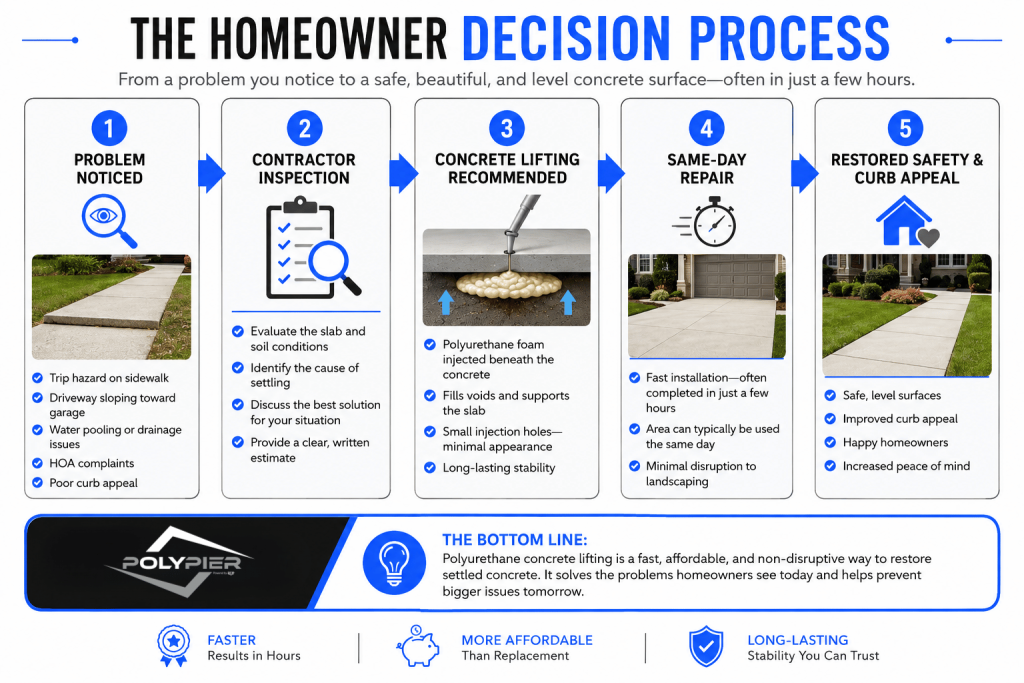
Most homeowners don’t wake up thinking they need concrete lifting. They notice a sidewalk that’s become a trip hazard, a driveway that’s sinking toward the garage, or a patio that’s no longer level. Many assume the only solution is to tear out and replace the concrete—often because they don’t realize a faster, more cost-effective alternative exists.
That’s where knowledgeable contractors have an advantage.
Selling polyurethane concrete lifting isn’t about explaining foam chemistry or injection pressures. It’s about helping homeowners understand the problem, presenting a practical solution, and giving them confidence that lifting their existing concrete is often the smarter choice.
Whether you’re new to concrete lifting or looking to close more residential jobs, these strategies can help you communicate the value of your services and earn more signed proposals.
Homeowners Buy Solutions—Not Concrete Repair
One of the biggest mistakes contractors make is jumping straight into how polyurethane foam works.
Most homeowners aren’t concerned with expanding foam or injection techniques. They’re focused on the problems those sunken slabs are causing.
They may be thinking:
- “Someone is going to trip and get hurt.”
- “Water keeps running toward my garage.”
- “Our HOA sent us a notice about the sidewalk.”
- “The front walkway makes the whole house look neglected.”
- “We’re trying to sell our home, and this hurts curb appeal.”
Instead of leading with technical explanations, start by discussing the issue they already recognize.
For example:
“I can see why you’re concerned. Besides being an eyesore, this sidewalk has become a safety hazard. The good news is that because the concrete is still structurally sound, we can often lift it back into place instead of replacing it.”
When homeowners feel understood, they’re much more receptive to hearing your recommendation.
Help Homeowners Understand Why Concrete Settles
Many homeowners believe concrete simply “wears out.”
Taking a moment to explain why slabs settle helps build trust and positions you as the expert.
Common causes include:
- Soil erosion beneath the slab
- Poor compaction during construction
- Water washing away supporting soil
- Seasonal freeze-thaw cycles
- Natural soil movement over time
Once homeowners understand that the problem is often beneath the concrete—not the concrete itself—they’re more likely to understand why lifting can be an effective repair.
Explain Why Concrete Lifting Often Beats Replacement
Many estimates begin with a homeowner expecting a complete replacement. One of your biggest opportunities is showing them there’s another option.
If the slab is structurally sound, polyurethane concrete lifting can often restore it without the expense and disruption of demolition.
| Concrete Lifting | Concrete Replacement |
|---|---|
| Repairs the existing slab | Removes and replaces the slab |
| Often completed in just a few hours | May take several days from demolition to completion |
| Minimal disruption to landscaping and surrounding areas | Requires demolition, debris removal, and new concrete installation |
| Lower overall project cost in many situations | Higher labor and material costs |
| Existing concrete remains in place | Old concrete must be removed and disposed of |
| Area can often be used the same day | May require several days before full use |
Rather than criticizing replacement, explain that both methods have their place. If the concrete is badly cracked or structurally failing, replacement may be necessary. However, for many settled slabs, lifting offers a faster and more economical solution.
Explain the Advantages of Polyurethane Concrete Lifting
Once homeowners understand that lifting is an option, they’re naturally curious about how it works and why it’s effective.
You don’t need to overwhelm them with technical details. Focus on the benefits that matter most.
Explain that polyurethane concrete lifting offers:
- Small injection holes that create a cleaner finished appearance than traditional mudjacking.
- Fast-curing material that often allows same-day use.
- Lightweight foam that helps fill voids and support the slab without adding significant weight.
- Water-resistant material designed for long-term performance in a variety of environments.
Keeping the explanation simple and benefit-focused helps homeowners feel confident without becoming overwhelmed by technical terminology.
Common Homeowner Objections—and How to Respond
Every contractor hears similar questions during estimates. Being prepared with clear, confident answers helps build trust.
“Shouldn’t I just replace the concrete?”
If the slab is still structurally sound, replacement isn’t always necessary. Lifting can often restore the concrete while saving time, money, and disruption.
“Will it just settle again?”
Properly installed polyurethane foam helps stabilize the slab by filling voids beneath the concrete. While every property is different, addressing the underlying support issue can provide a long-lasting repair.
“Will people be able to see where you repaired it?”
Polyurethane concrete lifting uses relatively small injection holes that are patched after installation, making the repair much less noticeable than many homeowners expect.
“How long will the project take?”
Many residential lifting projects can be completed in just a few hours, allowing homeowners to return to normal use much sooner than replacement.
Show Proof Instead of Making Promises
Homeowners trust what they can see.
Before-and-after photos remain one of the most effective sales tools a contractor has.
Whenever possible, show projects that closely match the homeowner’s situation, such as:
- Uneven sidewalks
- Settled driveways
- Sunken patios
- Pool decks
- Front entry walkways
- Garage floors
You can strengthen your presentation even further by sharing:
- Customer testimonials
- Google reviews
- Short project videos
- Local case studies
- Photos from similar neighborhoods
The more homeowners can visualize their own project, the easier it becomes for them to say yes.
Questions to Ask During Every Estimate
The best sales conversations start by listening.
Instead of immediately recommending a repair, ask questions that help uncover the homeowner’s priorities.
Some great questions include:
- When did you first notice the settling?
- Has it continued to get worse?
- Are you concerned about someone tripping?
- Have you noticed drainage issues around the slab?
- Has your HOA contacted you about the concrete?
- Are you planning to sell your home?
- Have you already received estimates for replacement?
These questions help you tailor your recommendation to what matters most to the homeowner instead of delivering the same presentation every time.
Make the Decision Easy
Once homeowners understand the problem and trust your recommendation, keep the next steps simple.
Provide:
- A thorough inspection of the affected concrete.
- A clear explanation of the repair process.
- Transparent pricing.
- Realistic project timelines.
- An opportunity to ask questions.
The easier it is for homeowners to understand exactly what will happen, the more comfortable they’ll feel moving forward.
How PolyPier Helps Contractors Sell More Concrete Lifting Projects
Successful contractors need more than quality polyurethane foam—they need the knowledge and resources to confidently educate homeowners and close more jobs.
PolyPier by Earth Contact Products (ECP) supports contractors with:
- Professional polyurethane foam systems
- Product and application training
- Technical support
- Marketing resources
- Dealer support designed to help businesses grow
By combining quality products with contractor education and ongoing support, PolyPier helps businesses build trust with homeowners, deliver consistent results, and grow their concrete lifting services.
Frequently Asked Questions
If the existing concrete is structurally sound, concrete lifting is often a faster and more cost-effective solution than replacement. Replacement may be necessary when concrete is severely cracked or deteriorated, but many settled slabs can be successfully restored through polyurethane lifting.
Keep the conversation focused on the homeowner’s concerns rather than technical details. Explain the safety, appearance, time savings, and cost benefits before discussing how polyurethane foam works.
When properly installed under appropriate site conditions, polyurethane concrete lifting is designed to provide long-term stabilization by filling voids and supporting settled slabs.
One of the biggest advantages of polyurethane foam is its fast cure time. In many cases, sidewalks, driveways, patios, and other concrete surfaces can be returned to service the same day.
Polyurethane concrete lifting is commonly used for sidewalks, driveways, patios, pool decks, front walkways, garage floors, and other settled concrete surfaces that remain structurally sound.
Many homeowners appreciate that lifting is typically less disruptive, more affordable, and much faster than replacing concrete. Because the existing slab remains in place, projects can often be completed in hours instead of days.
Help More Homeowners Discover a Better Solution
Many homeowners don’t realize concrete lifting is even an option until a knowledgeable contractor introduces it. By focusing on the problems homeowners care about, clearly explaining the benefits of polyurethane concrete lifting, and confidently addressing common questions, contractors can build trust and close more residential projects.
PolyPier by Earth Contact Products is committed to helping contractors succeed with high-quality polyurethane foam systems, training, and dealer support. If you’re ready to grow your concrete lifting business and help more homeowners choose repair over replacement, contact the PolyPier team today to learn more about becoming a partner.