Why Concrete Lifting Is a Valuable Year-Round Service for Foundation Repair Contractors
For foundation repair and waterproofing contractors looking to grow their business, concrete lifting offers a natural expansion of existing services. Many of the same customers experiencing foundation settlement, drainage issues, or crawl space concerns also have uneven sidewalks, settled driveways, sunken patios, or garage floors that need repair.
By adding polyurethane concrete lifting to your service offerings, you can provide more complete property solutions, increase revenue from existing customers, and create new opportunities throughout the year.
PolyPier® by ECP gives contractors a proven polyurethane concrete lifting system backed by industry-leading training, engineering support, and technical expertise, making it easier to expand your business with confidence.
Why Concrete Lifting Makes Sense
Concrete replacement has traditionally been the solution for settled slabs, but demolition, disposal, labor, and extended downtime can make replacement costly and disruptive. Polyurethane concrete lifting provides an efficient alternative by raising and stabilizing existing concrete without removing and replacing the slab.
For contractors already performing foundation repair or waterproofing, concrete lifting is a logical addition because many projects naturally overlap. Instead of referring customers elsewhere, your team can provide a broader range of services while increasing the value of every project.
Existing Customers Become New Opportunities
Many contractors are surprised by how often concrete lifting opportunities appear on jobs they’re already completing.
Common projects include:
- Sidewalk leveling
- Driveway lifting
- Garage floor stabilization
- Patio repair
- Porch lifting
- Pool deck leveling
- Warehouse floor stabilization
- Commercial sidewalk repairs
- Trip hazard removal
Offering concrete lifting allows contractors to solve multiple problems during a single project, improving customer satisfaction while increasing project value.
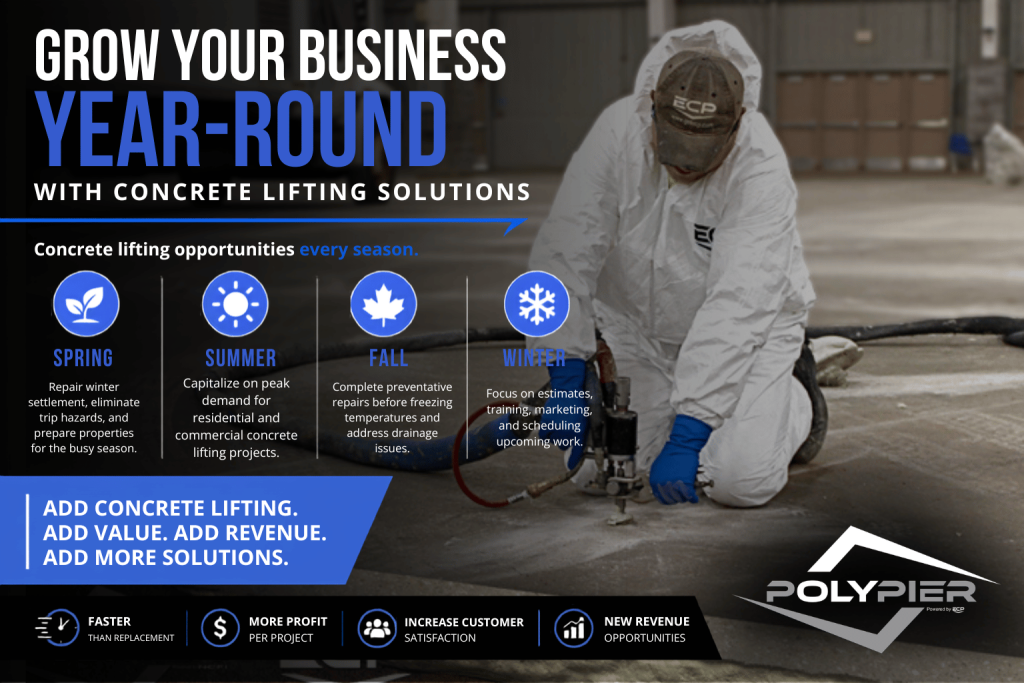
Concrete Lifting Opportunities Throughout the Year
While environmental conditions should always be evaluated before installation, concrete lifting creates opportunities across every season.
| Season | Common Concrete Lifting Opportunities |
| Spring | Repair winter settlement, eliminate trip hazards, restore sidewalks, patios, driveways, and prepare properties for the busy outdoor season. |
| Summer | Capitalize on peak demand for residential and commercial concrete lifting, including driveways, pool decks, warehouse floors, municipal sidewalks, and retail properties. |
| Fall | Complete preventative repairs before freezing temperatures arrive, address drainage-related settlement, and help customers prepare their properties for winter. |
| Winter | Focus on estimating upcoming projects, training crews, marketing concrete lifting services, strengthening customer relationships, and scheduling work for the spring season. |
Rather than viewing concrete lifting as a seasonal service, many contractors use it to create a more balanced workload throughout the year while continuing to serve both residential and commercial customers.
Environmental Conditions Matter More Than the Calendar
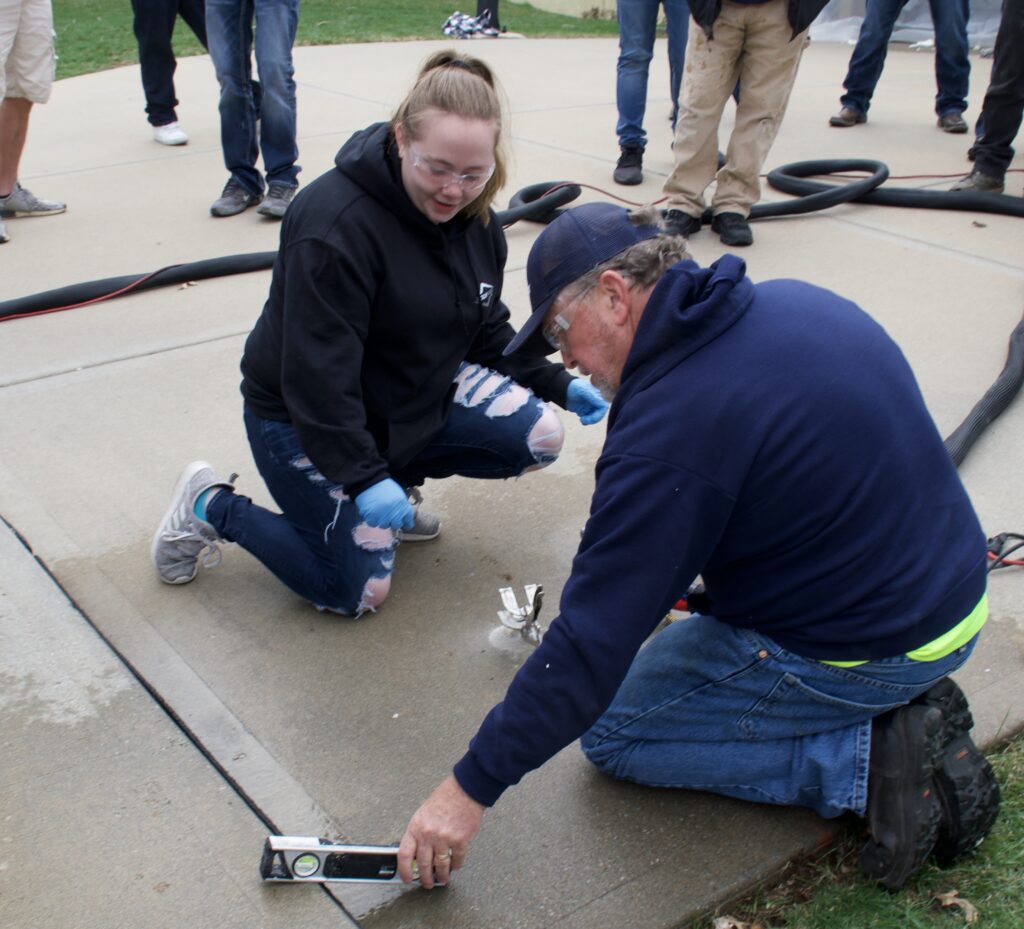
Successful polyurethane concrete lifting depends less on the season itself and more on evaluating jobsite conditions.
Contractors should consider factors such as:
- Slab temperature
- Soil temperature
- Moisture conditions
- Standing water
- Frozen ground
- Current and forecasted weather
- Site accessibility
Following manufacturer installation recommendations helps ensure proper foam expansion, curing, and long-term performance regardless of the time of year.
PolyPier vs. Traditional Concrete Replacement
| Traditional Replacement | PolyPier Concrete Lifting |
| Remove and replace existing concrete | Lift and stabilize the existing slab |
| Demolition required | Minimal disruption |
| Extended project timeline | Often completed in just hours |
| New concrete requires curing | Immediate use in many applications |
| Higher labor requirements | Smaller crews can complete many projects |
For many residential and commercial applications, polyurethane concrete lifting provides a faster, less disruptive solution while preserving existing concrete.
Expand Your Services Without Reinventing Your Business
Foundation repair and waterproofing contractors already possess many of the skills needed to successfully offer concrete lifting. Existing knowledge of soil behavior, settlement, drainage, and structural movement provides a strong foundation for expanding into polyurethane slab lifting.
With proper product training and technical support, contractors can confidently add concrete lifting as another valuable service while strengthening customer relationships and increasing project revenue.
Frequently Asked Questions
Yes. Many customers needing foundation repair also have settled sidewalks, driveways, patios, or garage floors, making concrete lifting a natural service expansion.
Concrete lifting can often be performed throughout much of the year when environmental conditions are suitable and manufacturer installation guidelines are followed.
Slab temperature, soil temperature, moisture levels, precipitation, standing water, and frozen ground should all be evaluated before installation.
Polyurethane concrete lifting is commonly used for sidewalks, driveways, patios, garage floors, porches, warehouse floors, commercial slabs, and other settled concrete surfaces.
Polyurethane lifting typically minimizes disruption, eliminates demolition, reduces project timelines, and allows many repaired surfaces to return to service much sooner than full concrete replacement.
Absolutely. Contractors frequently identify concrete lifting opportunities while completing foundation repair, waterproofing, or drainage projects, allowing them to provide more complete property solutions.
Grow Your Business with PolyPier
If you’re already helping customers solve foundation repair or waterproofing challenges, expanding into polyurethane concrete lifting is a natural next step. PolyPier gives contractors access to proven products, comprehensive training, engineering expertise, and ongoing technical support designed to help grow their business with confidence.
Visit our Become a Partner page to learn how PolyPier concrete lifting systems can help you expand your services and create new opportunities throughout the year.