Garage Floor Leveling with Polyurethane Foam: What Contractors
Driveways, sidewalks, patios, and pool decks may be some of the most familiar applications for polyurethane concrete lifting, but they aren’t the only opportunities for concrete repair contractors. Settled garage floors can also be candidates for polyurethane foam lifting and stabilization when the slab and site conditions are appropriate.
Garage slabs present contractors with a different set of considerations than many exterior concrete surfaces. Confined access, adjoining foundation components, floor drains, utilities, vehicle loads, drainage, and the transition between the garage floor and driveway can all influence how a project should be evaluated and approached.
For contractors already offering concrete repair—or those considering adding concrete lifting to their services—understanding how and why garage floors settle is an important part of identifying appropriate repair opportunities.
Why Do Garage Floors Sink?
A garage floor depends on the material and soil beneath it for support. When that support changes or is lost, portions of the concrete slab can settle.
Several conditions can contribute to a sinking or uneven garage floor:
- Poorly compacted fill: If fill material beneath the garage wasn’t adequately compacted during construction, it may consolidate over time and leave unsupported areas beneath the slab.
- Soil settlement: Supporting soils can compress or change over time, allowing portions of the slab to move downward.
- Erosion and soil washout: Water moving beneath or alongside the slab can carry away supporting soil and create voids.
- Drainage problems: Improper grading, downspout discharge, or other sources of water can contribute to changing soil conditions around a garage.
- Voids beneath the slab: Loss of supporting material can leave empty spaces between the concrete and the material below it.
For a concrete lifting contractor, determining why the slab settled is an important part of evaluating whether polyurethane lifting is an appropriate repair.
Signs a Garage Floor May Need Leveling
Some garage floor settlement is easy to recognize. Other signs may be more subtle.
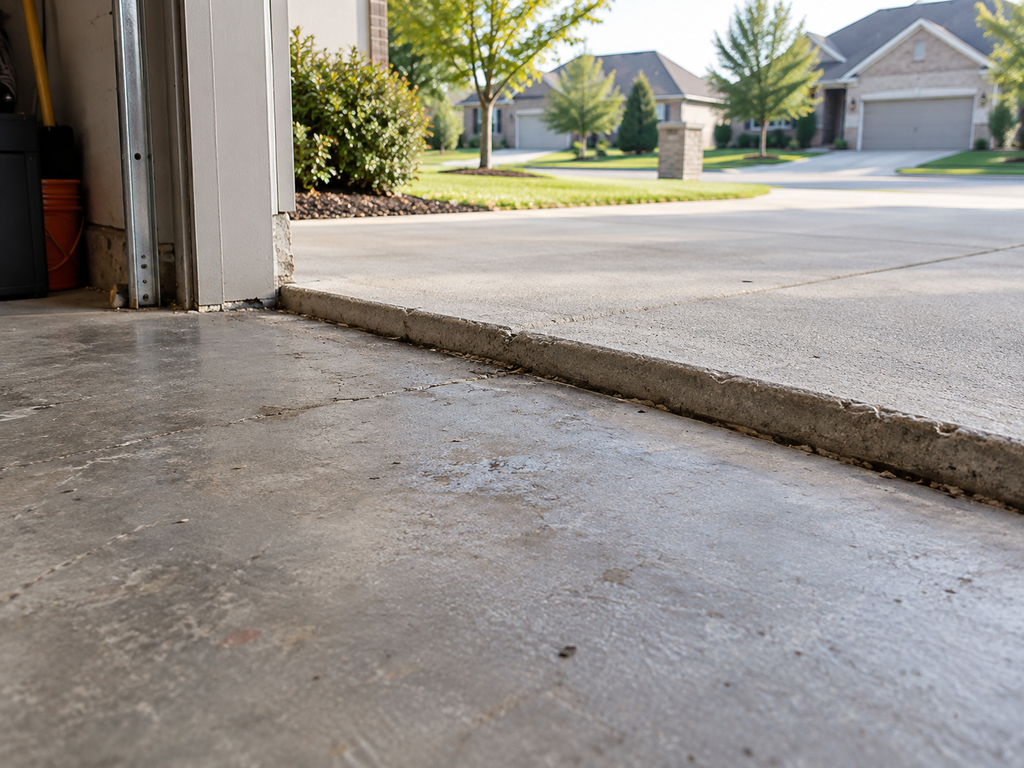
Uneven Garage-to-Driveway Transition
If the garage floor has settled below the driveway or apron, there may be a noticeable elevation difference at the garage entrance.
Contractors should evaluate both slabs to determine which surface has moved and what conditions may have contributed to the change.
Cracks with Vertical Displacement
Concrete can develop minor cracks for many reasons, and a crack alone doesn’t necessarily indicate settlement.
However, when one side of a crack is noticeably lower than the other, the slab may have experienced differential movement that warrants further evaluation.
Sloping or Uneven Floors
A garage slab can settle without developing a significant crack. One portion may gradually become lower than another, creating a noticeable slope across the floor.
Water Collecting in Low Areas
Changes in slab elevation can alter how water drains across a garage floor. Areas that begin collecting water may indicate that the floor is no longer at its original elevation or slope.
Gaps or Evidence of Lost Support
Visible gaps around portions of the slab or evidence of voids beneath the concrete can indicate that supporting material has been lost.
The presence of these signs doesn’t automatically mean the floor should be lifted. Professional evaluation should come before repair.
What Should Contractors Evaluate Before Lifting a Garage Slab?
Garage floor lifting isn’t simply a matter of finding the lowest point and injecting polyurethane beneath it.
Before beginning a project, contractors should evaluate the slab itself and the conditions surrounding it.
Important considerations can include:
Condition of the Concrete
Is the existing slab structurally serviceable, or is it badly deteriorated?
Polyurethane lifting can reposition and support suitable existing concrete, but it cannot restore concrete that has deteriorated beyond repair.
Amount and Pattern of Settlement
Contractors should identify where movement has occurred and how the elevations vary across the floor.
Understanding the settlement pattern can help determine how the slab may respond during lifting.
Cracks and Joints
Existing cracks, control joints, slab sections, and adjoining concrete can influence slab movement. These conditions should be documented and considered when planning the project.
Adjoining Foundation Components
A garage slab may interact with foundation walls, footings, columns, steps, door thresholds, or other structural components.
Contractors should understand how the slab relates to the surrounding structure before attempting to change its elevation.
Utilities and Floor Systems
Plumbing, floor drains, utilities, radiant heating systems, and other components may be present beneath or within a garage floor. Their locations and condition should be considered before drilling or injecting material.
Drainage and Water Conditions
If water contributed to soil loss or settlement beneath the slab, the source of that water may also need to be addressed.
Lifting the concrete does not automatically correct an ongoing drainage problem.
Can Every Sunken Garage Floor Be Lifted?
No. Not every settled garage slab is an appropriate candidate for polyurethane concrete lifting.
If the concrete itself is severely deteriorated, extensively damaged, or otherwise unsuitable for lifting, replacement or another repair method may be more appropriate.
Contractors should also determine whether there are conditions beyond slab settlement that need to be addressed separately.
For example, polyurethane may be used to fill voids and provide support beneath an appropriate slab, but an active source of erosion or water intrusion may still require correction.
A professional concrete lifting contractor should evaluate:
- Overall slab condition
- Settlement severity
- Crack patterns
- Underlying support conditions
- Drainage and water sources
- Adjacent structures
- Utilities and subsurface components
- Intended loads and use of the floor
Good concrete lifting begins with diagnosis, not injection.
How Is a Garage Floor Lifted with Polyurethane Foam?
The exact lifting plan depends on the slab and jobsite conditions, but professional polyurethane garage floor leveling generally follows several stages.
1. Evaluate the Slab and Settlement
The contractor first evaluates elevations, visible damage, surrounding conditions, and possible causes of settlement.
This helps determine whether polyurethane lifting is appropriate and where support may have been lost.
2. Plan the Injection
Injection locations are selected according to the slab configuration and conditions of the project.
Professional training and experience are important because injection placement and sequence can influence how polyurethane travels beneath the concrete and how the slab responds.
3. Drill Injection Holes
Small holes are drilled through the concrete at the planned injection locations to provide access beneath the slab.
4. Inject Polyurethane Foam
Specialized polyurethane material is injected beneath the garage floor. As the material reacts and expands, it can fill available voids and exert controlled pressure against the underside of the slab.
5. Monitor Slab Movement
Concrete lifting should be carefully controlled. The contractor monitors elevations and slab movement throughout the injection process rather than attempting to achieve the entire lift at once.
6. Complete the Repair
After the desired result is achieved, the injection process is completed and the access holes are patched.
Why Use Polyurethane Foam for Garage Floor Leveling?
Polyurethane concrete lifting offers several characteristics that can make it well suited for garage slab applications.
Lightweight Material
Polyurethane is significantly lighter than the cementitious slurry traditionally used for mudjacking. This allows contractors to fill voids and lift suitable concrete without introducing the same amount of additional material weight beneath the slab.
Small Injection Points
Polyurethane lifting uses relatively small injection holes, reducing the size of the areas that must be patched when the project is finished.
Controlled Lifting
Polyurethane reacts and expands after injection. With proper equipment, training, and application techniques, contractors can introduce material incrementally while carefully monitoring slab movement.
Void Filling and Stabilization
Expanding polyurethane can travel into available void spaces beneath a slab, helping restore support where appropriate.
Rapid Reaction
Polyurethane reacts quickly, helping contractors perform lifting projects efficiently and minimizing disruption to the property.
Less Demolition
When the existing garage slab remains serviceable, lifting may provide an alternative to removing and replacing the entire floor.
Polyurethane Garage Floor Lifting vs. Concrete Replacement
A settled garage floor doesn’t automatically need to be demolished and replaced.
When the existing concrete remains in suitable condition, lifting the slab may allow the contractor to preserve the existing floor while addressing voids and lost support beneath it.
Replacement may be more appropriate when the slab is severely cracked, deteriorated, damaged, or otherwise unsuitable for lifting.
| Consideration | Polyurethane Concrete Lifting | Concrete Replacement |
|---|---|---|
| Existing slab | Preserves suitable existing concrete | Existing concrete is removed |
| Demolition | Limited | Required |
| Injection/access | Small injection points | Removal and reconstruction |
| Project disruption | Typically lower | Typically more extensive |
| Under-slab voids | Polyurethane can fill accessible voids | Subgrade can be reworked before repouring |
| Best suited for | Serviceable slabs affected by settlement or voids | Severely damaged or unsuitable concrete |
The correct recommendation depends on the condition of the concrete and the cause of the problem—not simply which repair method is available.
Special Considerations When Lifting Garage Floors
Garage slabs can present challenges contractors may not encounter on a typical sidewalk or driveway project.
For example, contractors may need to account for:
- Garage doors and thresholds
- Transitions between the garage and driveway
- Foundation walls and footings
- Interior columns or supports
- Floor drains
- Plumbing and utilities
- Radiant floor systems
- Vehicle and equipment loads
- Drainage slope
- Attached steps or adjoining slabs
These variables make jobsite evaluation and professional concrete lifting training especially important when expanding into garage floor applications.
Expand Your Concrete Lifting Services Beyond Garages
Garage floor leveling is only one application for professional polyurethane concrete lifting.
Contractors equipped and trained to use polyurethane foam may encounter repair opportunities involving:
- Sidewalks
- Driveways
- Pool decks
- Patios
- Sinking slabs
- Roads and walkways
- Bulkhead repair
- Soil stabilization
- Commercial concrete applications
For foundation repair, waterproofing, concrete, and specialty contractors, developing polyurethane lifting capabilities can provide another service for addressing appropriate settlement and void-related problems.
Considering adding this service to your company? Learn more about [starting a concrete lifting business with polyurethane foam] and the equipment, skills, training, and business considerations involved.
Frequently Asked Questions About Garage Floor Leveling
In many cases, a settled garage floor can be lifted if the existing concrete remains in suitable condition and site conditions make lifting appropriate. A contractor should evaluate the slab, cause of settlement, underlying support, adjacent structures, and other jobsite conditions before recommending a repair.
Garage floors can settle because of poorly compacted fill, soil consolidation, erosion, water movement, or void formation beneath the concrete. Determining the cause is an important part of choosing an appropriate repair.
Polyurethane foam can be injected beneath suitable garage slabs to fill voids, provide support, and create controlled lifting force. The application requires specialized equipment and an understanding of polyurethane behavior and slab movement.
Yes. Expanding polyurethane can fill accessible void spaces beneath concrete. Contractors should also investigate why the void developed, particularly when erosion, drainage, or water movement may be involved.
Not necessarily. Concrete can crack for several reasons. Contractors should look for additional evidence of settlement, such as vertical displacement across a crack, uneven elevations, voids, or changes in floor slope.
It depends on the condition of the concrete and the cause and severity of settlement. A serviceable slab may be a candidate for lifting, while severely deteriorated or damaged concrete may require replacement.
After evaluating the slab, a trained contractor plans injection locations, drills small access holes, and injects polyurethane beneath the concrete. The expanding material can fill voids and provide controlled lifting force while the contractor monitors slab movement.
Polyurethane materials react and cure rapidly, but return-to-service recommendations can vary according to the material, application, loads, and project conditions. Contractors should follow the manufacturer’s specifications for the polyurethane system being used.
PolyPier Solutions for Concrete Lifting Contractors
Garage floor leveling requires more than polyurethane foam. Contractors need appropriate equipment, application knowledge, training, and the ability to evaluate whether a slab is a good candidate for lifting.
PolyPier by Earth Contact Products (ECP) provides professional polyurethane solutions for concrete lifting and stabilization applications.
ECP also supports contractors through PolyPier concrete lifting training, helping professionals develop knowledge of equipment operation, application techniques, job evaluation, and troubleshooting.
For contractors interested in expanding their services, PolyPier can provide a path toward adding professional polyurethane concrete lifting to an existing repair business.
Interested in Offering Garage Floor Leveling?
If you’re a contractor interested in adding garage floor leveling, slab lifting, and other polyurethane concrete repair applications to your services, learn more about PolyPier equipment, materials, training, and contractor opportunities.
If you’re a property owner with a sunken or uneven garage floor, PolyPier can help connect you with a professional concrete lifting contractor in your area.