Using Polyurethane Foam For Foundation Bulkhead Repair
PolyPier, a concrete leveling foam, can be used for repairing foundation bulkheads.
Foundation bulkheads, also known as foundation retaining walls or foundation walls, are retaining walls that support soil or other materials around the foundation of a building.
Why are foundation bulkheads necessary?
Foundation bulkheads are essential for several reasons. First, they serve as a barrier between the building foundation and the surrounding soil. This prevents soil movement and erosion, which can cause foundation settling, cracking, and other damage.
Additionally, foundation bulkheads can provide additional support for the building’s weight. This is especially true in areas with poor soil conditions or steep slopes.
How are bulkheads constructed?
Bulkheads are usually made of concrete, masonry, or steel. They resist lateral soil pressure and prevent the soil from collapsing onto the foundation.
The exact construction process will depend on the bulkhead’s specific design and the soil conditions at the building site.
The foundation bulkhead construction process begins with excavating soil to create a trench. Steel bars or mesh are used for reinforcement, followed by pouring concrete or masonry for the bulkhead. Finally, the soil behind the bulkhead is backfilled to create a stable foundation for the building.
Concrete Lifting Foam Uses
Read more about some of the uses for PolyPier concrete lifting foam:
What causes foundation bulkhead damage?
Foundation bulkheads can become damaged or worn over time due to factors such as water infiltration, soil movement, and freeze-thaw cycles.
Cracks, bulges, and other signs of damage may appear in the bulkhead. This compromises its ability to support the soil and protect the foundation.
How can PolyPier Be Used for Foundation Bulkhead Repair?
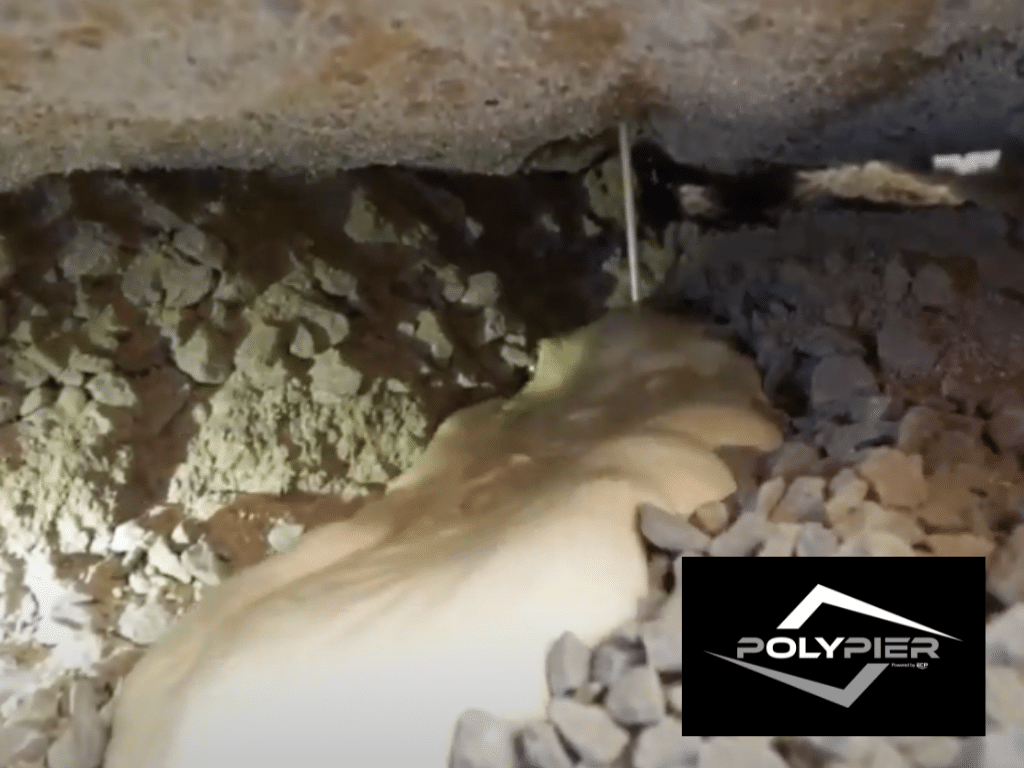
PolyPier, a specialized polyurethane concrete leveling foam, can stabilize and repair foundation bulkheads by filling gaps or voids.
Polyurethane foam can be injected into small cracks and gaps in the foundation to seal them and prevent water from entering the building.
It can also be used to fill voids and stabilize soil, helping prevent further damage to the foundation.